

The Madonna / Whore Split: Reclaiming the Full Spectrum of the Feminine
- lightofalchemya
- Mar 7
- 7 min read
This psychological and cultural fracture disconnects union from love and disconnects women from the fullness of themselves.
Over the last 12 months I’ve been studying the work of Carl Jung and exploring the archetypes and masks that we wear. Jung didn’t give an exact number of archetypes, because he believed they are universal patterns that appear endlessly across cultures and myths. However, he did identify several core archetypal patterns such as the Mother, Maiden, Shadow, Wise Old Man/Woman, Trickster, Hero and the Self. These archetypes show up in different forms throughout human psychology.
Some of us carry certain archetypes more strongly than others. For example, someone might embody more of the creative archetype, or perhaps the witch archetype, while another person might embody the mother, queen, or maiden more strongly.
But today I want to talk about two particular archetypal energies that actually don’t come directly from Jung’s work, yet have been studied widely in psychology.
These are the Madonna and the Whore.

The Madonna / Whore Complex
The Madonna / Whore complex was first described by Sigmund Freud in the early 1900s and psychologists have been studying it ever since.
It’s the belief that a woman must be one of two things.
Either she is the Madonna, the good woman, pure, respectable, chosen, marriage material.
Or she is the Whore, the sexual woman, desirable, wild, erotic, but somehow unworthy of devotion.
You can see this split everywhere in culture.
The Madonna archetype looks like Grace Kelly, or even Betty Draper from Mad Men, the pristine, elegant, emotionally contained woman. The respectable housewife. The one society approves of.
The Whore archetype looks more like Marilyn Monroe or Pamela Anderson, expressive, untamed, sensual, playful. The woman who loves pleasure, attention, and being fully alive.
But here’s the issue.
Society often tells men to marry the Madonna but secretly desire the Whore.
This conditioning became especially strong after World War II, when Western culture promoted the image of the “perfect life” the suburban home, the wife, the children, the tidy nuclear family. The so-called Australian and American Dream.
Men were taught that happiness meant marrying the respectable woman who could create the home, raise the children, and uphold the social image of success.
But the erotic, wild feminine energy was pushed outside the relationship.

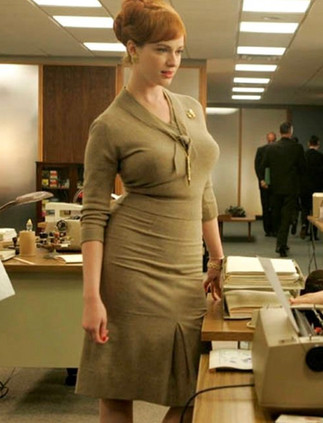


Joan (Whore) and Betty (Madonna) from Mad men
The Programming We Carry
This isn’t about blaming men or blaming women.
It’s about recognising the deep subconscious programming we all carry.
Many of us learned early in life that certain parts of ourselves were unsafe to express.
Maybe it felt unsafe to be sexual.
Maybe it felt unsafe to be powerful.
Maybe it felt unsafe to be emotional, creative, or wild.
Often we saw this reflected in our families growing up.
Psychology and even mystical traditions like Gnostic Christianity teach us that we are far more complex than the identities we build.
The word personality actually comes from the word persona, which means mask.
These masks are created largely in the first seven years of our lives, shaped by our environment, our family, and social expectations.
But the truth is:
Our identity is not who we truly are.
We are multi faceted beings capable of expressing many different energies.
The Split Within Relationships
The Madonna /Whore complex doesn’t just affect women, it exists in men too.
When a man carries this internal split, women often feel pressured to be either one or the other.
This creates a double standard that fuels:
• Shame
• Comparison
• Suppressed sexuality
• Emotional disconnection
• Sexual energy leaking outside the union
This is how the feminine becomes split and unintegrated.
Often the men who carry this struggle are not truly embodied in their masculine energy yet.
They are what some would call uninitiated masculine men.
Many also carry a mother wound.
Instead of separating psychologically from the mother and becoming a fully independent man, they unconsciously look for a partner who can mother them.
Yet at the same time they still desire the erotic, untamed feminine.
So they search for both archetypes in different women rather than integrating them into one relationship.

Archetypes in Pop Culture
Once you start studying archetypes, you realise they appear everywhere in storytelling and culture.
For example, in the film The Sisterhood of the Traveling Pants, the four girls each represent different archetypal energies:
• Bridget – The sporty, adventurous one
• Tibby – The introverted intellectual
• Lena – The quiet, romantic, Madonna-like archetype
• Carmen – Expressive, emotional, and creative

We also see this clearly in Sex and the City:

Even the Spice Girls were built around archetypes:
• Baby Spice
• Ginger Spice
• Sporty Spice
• Scary Spice
• Posh Spice
If you grew up in the 90s like I did, you probably remember asking your friends:
“Which Spice Girl are you?”
We all chose one.
This is why these movies & girl bands were so successful! We all see ourselves in these characters.

My Childhood Experience With Archetypes
I remember being in primary school when TLC was huge in the 90s. The group had three members and my friends and I would each choose which one we were.
We really embodied those identities.
Then when the Spice Girls came out, I remember dressing like Baby Spice, while one of my girlfriends wore Kappa pants, Adidas sneakers, and hoodies. She was clearly Sporty Spice.
Looking back now, I see that we were playing with archetypes.
It wasn’t really who we were, we were just exploring.
That’s exactly what the Maiden archetype does so well.
She experiments.
She explores.
She discovers herself AND to do that, she needs to try on different identities.
Archetypes, Makeup and Expression
I also see archetypal expression through makeup.
Makeup can shift your entire energy. It can change your state, your frequency, your presence.
As women we have the ability to express so many facets of ourselves.
We are like a diamond. Each side reflects a different part of who we are.
We don’t have to be just one thing. I love that about the work I do.

The Many Facets of My Own Life
For example, I’m a mother.
I have three children. I’m married. I’m a housewife. I love gardening, sewing, and playing my harp.
But I’m also a businesswoman.
I love rap music. I have this inner gangster and inner fire within me.
Music actually says a lot about a person and their background.
For those of you who are new to my work, I am also a makeup artist and I’ve been doing it for 24 years.
I absolutely love transforming women and seeing women see themselves in a different light.
This is why I don’t think I will ever stop working with what I call glamour magic.
I love seeing beauty radiate through each woman and every woman’s beauty is different.
And that’s what I love most about archetypes.
They are all beautiful in their own unique way.

We are made of many facets.
I choose not to share my husband and children online because I honour and respect their privacy. Some parts of life feel too sacred to place on the internet, just like my altar. But I do love expressing the many sides of who I am. When I allow those parts of myself to exist, I get to show up in my work with so much more pleasure and joy.
There is something deeply freeing about simply being yourself.
Archetypal Work in the Venusian Business Codes
Inside my Venusian Business Codes program, I teach women how to work with archetypes in their business and their lives.
A lot of this work is inspired by Jungian psychology and also teachings from my mentor Natalia from Unleash the Goddess, who helped me understand archetypal embodiment on a deeper level.
This work allows you to bring forward your true authentic self.
A business that is built from joy.From pleasure.From passion.
And when you begin expressing your authentic archetypal energies, it is incredibly freeing.
The Archetype That Triggered Me Most
One thing I’ve noticed about archetypal work is this:
The archetypes that trigger you the most are usually the ones you haven’t integrated yet.
For me, that archetype was the Queen.
When I was younger, I actually felt repulsed by the Queen archetype.
If I saw a woman embodying her Queen energy, I would feel judgmental. As a maiden, I might even gossip about her.
There was a part of me that wanted to be her.
But another part of me rejected her.
She seemed showy. Arrogant. A bit “up herself”.
What I didn’t realise at the time was that I was seeing the shadow expression of the Queen, hierarchy, intimidation, masculine authority, greed, control.
But the true Queen archetype is something very different.
When I finally began integrating the Queen within myself, everything changed.
My business expanded, actually.. it exploded.
My nervous system regulated as my success grew.
I developed stronger boundaries, deeper self-respect and a feminine form of leadership that felt authentic.

The Rose Archetype
Another symbol I work with deeply is the Rose.
The rose carries many layers, beauty, sensuality, softness, protection, depth.
Just like women, roses come in many different forms.
And within the archetypal work of the Venusian Business Codes, the rose represents the many expressions of feminine power.
Reclaiming the Whole Woman
The truth is this:
You carry every archetype within you.
Some will be more dominant. Some will be dormant. Some may still be living in your shadow.
But you are not meant to live as just the Madonna.
And you are not meant to live as just the Whore.
You are meant to live as the whole woman.
Creative. Wild. Nurturing. Powerful. Sensual. Wise.
All of it belongs to you.
When you allow those parts of yourself to exist together, without shame.. something incredibly liberating happens!
You come home to who you truly are.
Amanda Dyer
Light of Alchemy
Celtic Rose Academy

We start the Venusian Business Codes 3 month program on Wednesday 29th April at 7pm AEST
For more information click here: